-01.png)
Resolving Performance Issues with General Electric CFW Over and Under Power Relays
At Nuclear Electronic Solutions (NES), we were recently called upon to address a critical issue at a nuclear power plant involving the performance of a General Electric CFW Over and Under Power Relay. This relay is crucial for monitoring imbalances between the input power and the actual power consumed by the Reactor Coolant Pump (RCP), a key safety measure to prevent serious operational issues.
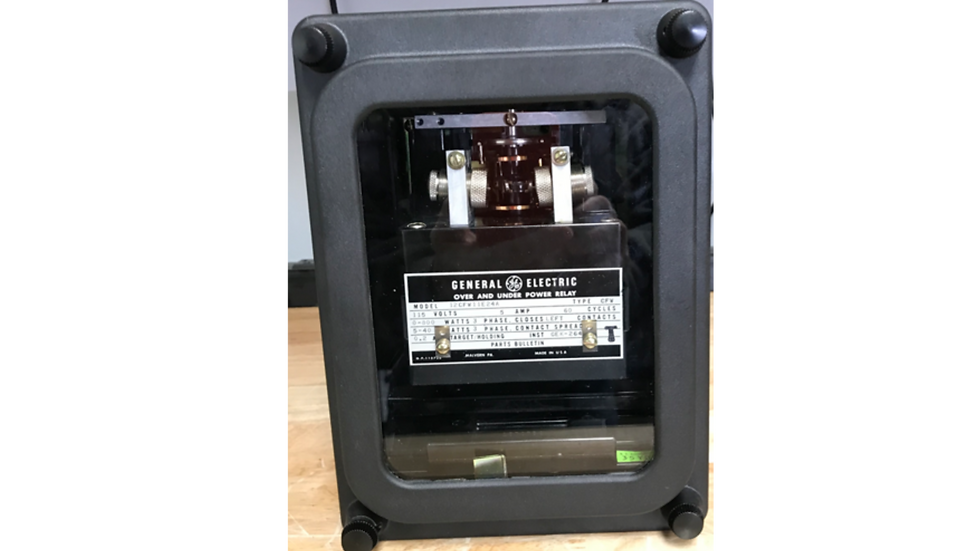
During routine trip testing of the RCP, the relay consistently failed to detect power imbalances, or “off-normal conditions.” Initial tests by plant personnel were unable to determine the cause of the relay’s failure. NES was then engaged to conduct a thorough analysis and determine the root cause of the issue.
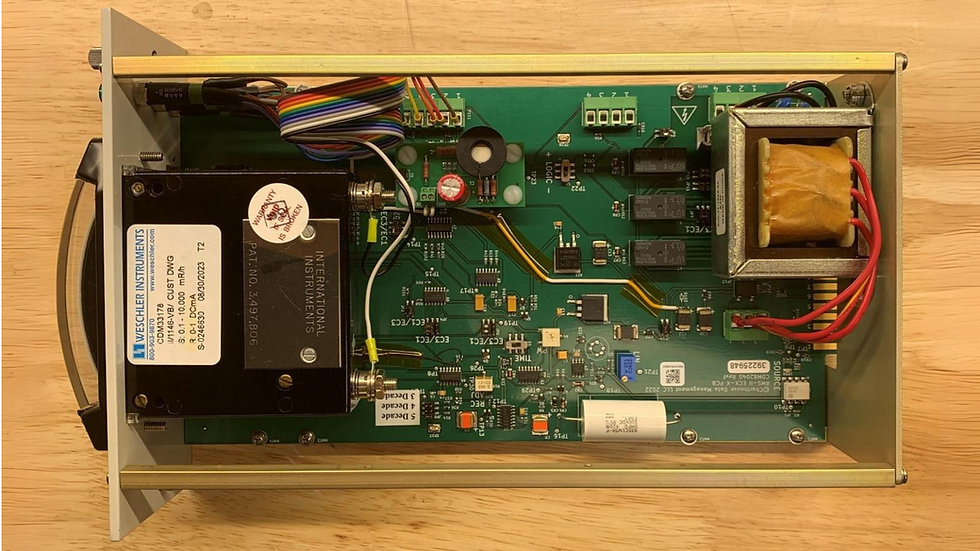
Our team at NES undertook a detailed examination of the relay's operational design and developed specialized test equipment to diagnose the problem. We crafted a comprehensive test plan and meticulously observed the relay’s mechanical operations while measuring the electrical performance of its components. This data was then analyzed to identify any deviations from the relay’s intended function within the RCP power monitoring system.
Our investigation revealed that the problem stemmed from the relay’s method of implementation within the system. The relay’s internal holding coil was designed to keep the relay contacts closed upon detecting an RCP power imbalance. However, it was installed in such a way that when the RCP power was balanced, the relay was in its “off-normal” state. Consequently, during a power imbalance, the relay contacts could not open to signal the off-normal condition.
We submitted our findings to the plant, highlighting that the procedure to disconnect the holding coil had not been performed on this relay. Following our recommendations, the plant disconnected the holding coil and verified that all similar relays had undergone the necessary procedure.
This project underscores NES’s commitment to solving complex technical issues and enhancing the safety and reliability of critical systems in the nuclear power industry.


Comments